Transformative times call for transformative solutions.
For years, health care costs have outpaced employers’ ability to keep up1, creating a growing strain on budgets and long‑term planning. This year is no different.
Medical cost trend—a sort of projected “pressure gauge” for the health system—rises and falls from innovations in care, effectiveness of benefit design, shifts in consumer behavior, and other market dynamics, including hospital consolidation.2
According to accounting firm PricewaterhouseCoopers (PwC), the medical cost trend for commercial employer-sponsored health plans is 8.5%, matching the elevated levels of 2025.3
This same PwC report states that commercial plans are achieving some success in managing total cost of care; however, “in 2026, medical cost trend is once again hovering at rates reminiscent of 15 years ago.”
Why aren’t medical cost trends letting up? And what can employers do to beat the trend?
“It’s been clear for a long time that even the most aggressive traditional tools—network negotiations, tiered networks, gatekeepers, and cost-shifting—have not been enough to effectively manage trend,” says Albert Snell of Surest. Many employers feel like they’ve reached a breaking point.
A few reasons behind the increase in costs
Costly wear-and-tear conditions
As reported by the Orthopaedic Research Society, musculoskeletal (MSK) conditions—arthritis, lower back pain, and neck pain—affect more than one in two adults4. And according to a report by Mercer, these costs add up to an estimated $420 billion—more than any other chronic condition.5
Strategies to hold the line: By managing MSK conditions before they get worse, employers may help their employees (and themselves) avoid costly hospital episodes. One strategy is adopting digital-first MSK solutions to help employees access costs, providers, and scheduling—all from their phones. Another is helping employees become aware of conservative, cost‑effective treatments—for example, starting with physical therapy rather than jumping right into surgery. When members make choices that may improve their experience and may help keep costs in check, employers get a real opportunity to save.
Cause: Hospital costs and health system consolidation
Of the $5.3 trillion spent on U.S. health care, hospitals account for approximately 30% of total national health expenditures, according to data released by the Centers for Medicare & Medicaid Services.6 This CMS‑released data shows that hospital spending is the largest single category of national health expenditures—outpacing physician services, prescription drugs, and other categories.
Strategies to hold the line:Employers may help reduce unnecessary spending by promoting virtual care and educating members on alternatives to potentially avoidable emergency room visits, like urgent care.7 They can also reinforce the importance of choosing high‑value providers.
Cause: Behavioral health claims
According to “State of the Behavioral Health Workforce, 2025,” a report by the U.S. Health Resources & Services Administration, many behavioral health providers are dealing with payer rate cuts or very minimal increases, which makes it harder for them to expand mental health services or even maintain current capacity.8 At the same time, behavioral health providers are feeling squeezed.9
And there’s no end in sight. Health plans are anticipating another 10–20% jump in behavioral health demand over the next year.10 According to PwC, the sector is heading into “an uphill battle to maintain access and quality care in the years to come.”11 In other words, demand is climbing faster than the system can realistically keep up—something employers should keep in mind as they think about supporting their workforce.
Strategies to hold the line:More employers are working to make behavioral health care more accessible, offering Employee Assistance Programs and digital care that meets employees where they are.12 This includes emotional wellness tools to manage stress (mindfulness and meditation), and adding access to virtual mental health care.
The biggest strategy of all? A redesigned health plan that can reshape results.
Employers are paying a lot more to provide health benefits to employees.13 Per the Kaiser Family Foundation, the average annual premium in 2025 for employer‑sponsored family coverage reached $26,993, and workers paid an average of $6,850 toward that cost.14
What to do in this challenging cost environment? More than half of large employers surveyed by Mercer said they planned to pass along higher prices through “cost-cutting changes,” including higher deductibles, copays, and other out-of-pocket expenses.15
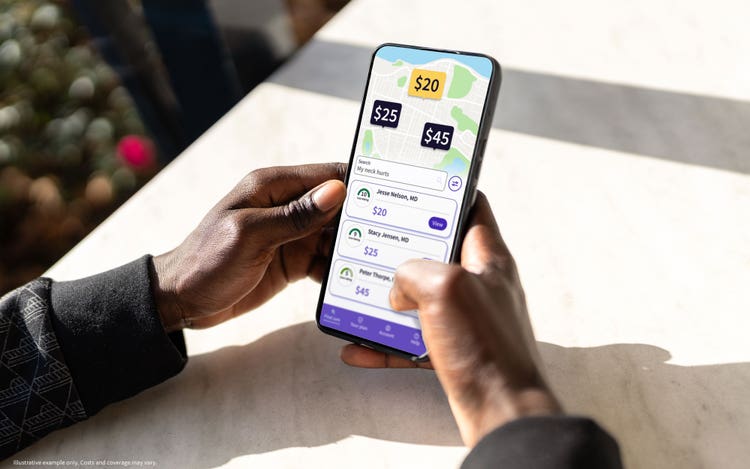
Surest, the first in market to introduce an alternative health plan, is built around how members shop for care—without a deductible in the way. Instead, members pay a copay and can see that copay before scheduling medical care. That transparency is huge. Even more impactful is a redesigned pricing structure baked right into the plan itself.
“I see the greatest potential to control trend sustainably if we align the incentives of providers and the incentives of members with higher-value care at more competitive price points,” Snell comments. Employers and plan members both benefit when payment reflects outcomes rather than volume.
Higher-value care that’s less-costly? That’s the goal.
“When the value of service is reflected in the price, then people can begin to make more informed choices about their health care,” says Norris Vivatrat, MD, chief medical officer at Surest.
Simply put: It comes down to having options.
Providing options drives new choices and behaviors. This can potentially reduce costs for members and employers — a strategy with the potential to finally move the medical cost trend needle.[16]
Discover how Surest is setting a new standard. Contact your broker, consultant, or UnitedHealthcare representative.
See how the Surest plan is leading the way.
Surest is an ACA-compliant health plan for employers with 2+ employees. It’s offered through employers in 49 states, excluding Hawaii. Funding arrangements include self-funded, level funded, and fully insured. Plan designs and funding options vary by state. Please contact your broker or UnitedHealthcare representative for details.
You may also like...
1Mercer’s 2025 National Survey of Employer-Sponsored Health Plans, 2025. https://www.mercer.com/en-us/solutions/health-and-benefits/research/national-survey-of-employer-sponsored-health-plans/
2Mercer’s 2025 National Survey of Employer-Sponsored Health Plans, 2025. https://www.mercer.com/en-us/solutions/health-and-benefits/research/national-survey-of-employer-sponsored-health-plans/
3“Behind the numbers: No let up in sight,” PricewaterhouseCoopers annual report, 2026. https://www.pwc.com/us/en/industries/health-industries/library/behind-the-numbers.html
4“The Burden of Musculoskeletal Disease,” 2026. https://www.ors.org/burden-of-disease/
5“Employers prepare for the highest health benefit cost increase in 15 years,” a report by Mercer, 2026. https://www.mercer.com/en-us/insights/us-health-news/employers-prepare-for-the-highest-health-benefit-cost-increase-in-15-years/
6National Health Expenditures, Centers for Medicare & Medicaid Services. https://www.cms.gov/data-research/statistics-trends-and-reports/national-health-expenditure-data/nhe-fact-sheet
7Analysis comparing Virtual Designated Provider utilization rates between Surest and non-Surest self-funded plans that offered at least one Surest and one non-Surest plan in 2022, 2023, and 2024.
8“State of the Behavioral Health Workforce” – U.S. Health Resources & Services Administration. 2025. https://bhw.hrsa.gov/sites/default/files/bureau-health-workforce/data-research/Behavioral-Health-Workforce-Brief-2025.pdf
9“State of the Behavioral Health Workforce” – U.S. Health Resources & Services Administration. 2025. https://bhw.hrsa.gov/sites/default/files/bureau-health-workforce/data-research/Behavioral-Health-Workforce-Brief-2025.pdf
10Behind the numbers: No let up in sight,” PricewaterhouseCoopers annual report, 2026. https://www.pwc.com/us/en/industries/health-industries/library/behind-the-numbers.html
11Behind the numbers: No let up in sight,” PricewaterhouseCoopers annual report, 2026. https://www.pwc.com/us/en/industries/health-industries/library/behind-the-numbers.html
12Mercer’s “Survey on Health & Benefit Strategies for 2026.” https://www.mercer.com/en-us/insights/total-rewards/employee-benefits-strategy/2026-benefit-strategies-report/
13Mercer’s “Survey on Health & Benefit Strategies for 2026.” https://www.mercer.com/en-us/insights/total-rewards/employee-benefits-strategy/2026-benefit-strategies-report/
14“2025 Employer Health Benefit Survey,” Kaiser Family Foundation. https://www.kff.org/health-costs/2025-employer-health-benefits-survey/
15Mercer’s “Survey on Health & Benefit Strategies for 2026.” https://www.mercer.com/en-us/insights/total-rewards/employee-benefits-strategy/2026-benefit-strategies-report/
16“Surest health plan eliminates deductibles and helps lower total cost of care,” UnitedHealthcare, 2024.
https://www.uhc.com/news-articles/benefits-and-coverage/surest